‘Astonishing’ Absenteeism, Trauma Rates Root of Academic Crisis
50-state report spotlights social, health and economic factors driving country鈥檚 literacy and math crises, urging investments in family engagement.

;)
Education news and commentary, delivered right to your inbox.
Sign up for 社区黑料 newsletter.
Get stories like this delivered straight to your inbox. Sign up for 社区黑料 Newsletter
Nearly 15 million children were chronically absent in the 2021-22 school year, doubling pre-pandemic numbers, and millions have lived through at least one traumatic experience, such as parent death or abuse.
The examines the causes driving the 鈥渁stonishing鈥� rates, resulting in bleak educational outcomes and disproportionately impacting Native, Black and Latino children.
The national report, which explores social, health and economic factors across while also highlighting programs that work, paints a stark portrait of the state of child well-being. From a decline in the number of 3 and 4 year olds in school to an increase in the rate of child deaths, it warns the United States 鈥渟tands on the precipice of losing our economic standing.鈥�
Without urgent, targeted investments in family engagement, social emotional health and tutoring, a generation of Black and brown kids may soon be shut out of fast growing, high-paying STEM fields, researchers say.
Today 2 in 5 or 40% of kids have experienced at least one of what experts call 鈥� trauma such as the loss of a parent from incarceration, divorce or death; housing or food insecurity; exposure to violence or substance use; and forms of abuse. In Mississippi and New Mexico, half of children experienced such trauma, according to 2021-22 data.
鈥淚 think we should all be astonished that kids in this country are experiencing ACEs [trauma] at the rate that they are,鈥� said Leslie Boissiere, vice president of external affairs with the Casey Foundation, which has published data books on the state of childhood and funded related initiatives for more than 30 years.
鈥淲e also know that post-pandemic, chronic absence is twice the level that it was before 鈥� it’s critically important that we understand what are the factors that are affecting kids as they enter the classroom and what’s preventing them from showing up for school.鈥�
Alaska, Arizona, Washington D.C., and Oregon saw the highest chronic absenteeism rates, between 42 and 46%. Idaho, Louisiana, New Jersey and Washington saw the lowest, with between 4 and 18% of kids chronically absent in the 2021-22 school year, the latest available data.
Several New England states that invest heavily in early childhood education 鈥� New Hampshire, Massachusetts and Vermont 鈥� ranked highest in Kids Count鈥檚 latest annual state by state comparison for overall child well-being. Utah and Minnesota round out the top five, based off of 16 education, health, economic and family indicators.
Beyond traumatic experiences, the data book points to rising economic or housing instability; limited or costly childcare options, which results in siblings caring for each other or working; and transportation challenges as common factors impeding children from attending school consistently.
鈥淲hat we’re seeing is many kids don’t have those basics met 鈥� Most of the country now accepts that we’re in a reading and literacy crisis but to break down, what does it actually look like and what does it mean? It is particularly alarming,鈥� Boissiere said.
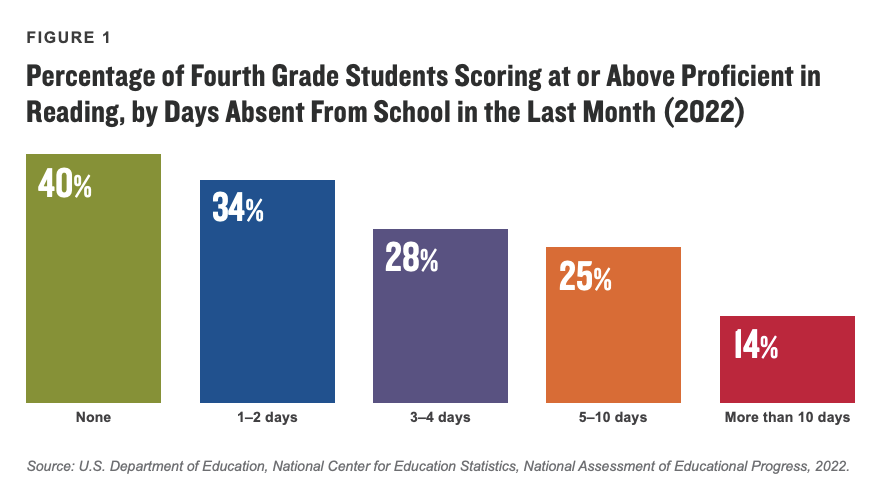
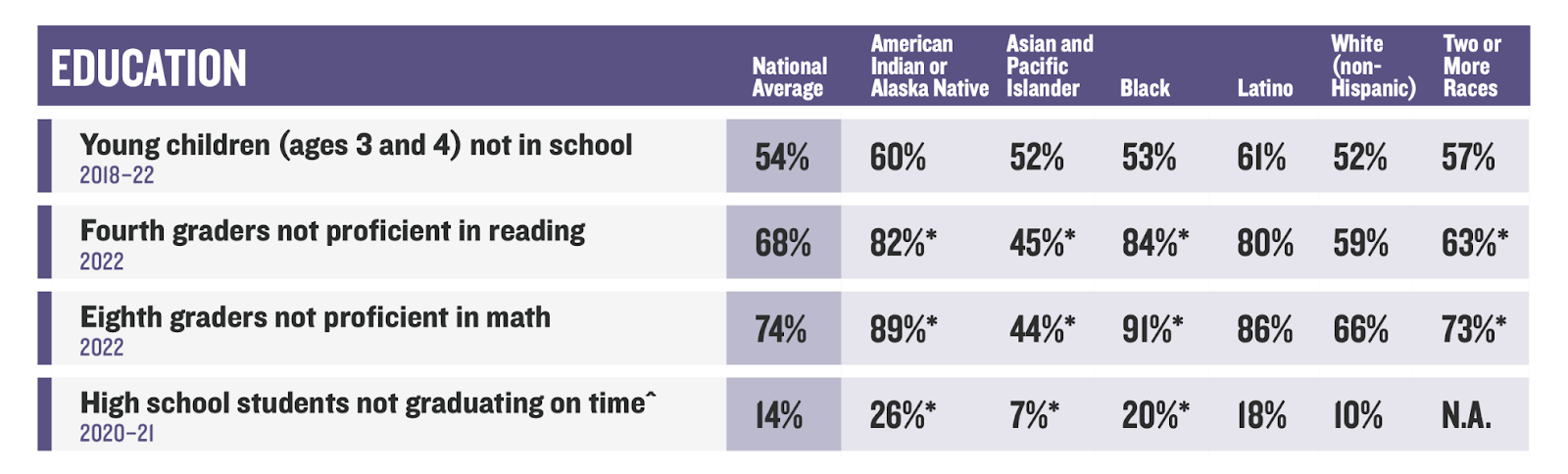
While the report unveils some bright spots that will improve childrens鈥� well-being 鈥� an increase of kids who are insured and a decrease in the teen birth rate 鈥� the reality facing educators is that only one in three kids are reading at grade level by 4th grade.
One in four kids are proficient in 8th grade math. Racial breakdowns reveal alarming inequities: only 9% of Black kids, 11% of Native kids, and 14% of Latino kids are proficient.
Additionally, 54% of 3 and 4 year olds, roughly 4.3 million, are not in school, up from pre-2018 numbers, which has alarmed experts who point to the age as critical for mastering basic literacy and numeracy. The share is much higher for young Native and Latino children, 60% and 61% of whom are not in school, respectively.
鈥淭he demographics of the public school system are only growing more and more diverse, so to ignore these disparities would really disservice most students in public schools,鈥� Boissiere added.
Over $40 billion of federal pandemic relief funds for education remain unspent; states have until September 30 to allocate funds, which could be used through 2026.
Authors urge every school to track absenteeism and invest in family engagement to better understand the challenges facing families in their particular context. They recommend implementing high dosage tutoring and point to the community school model, which offers wraparound physical and emotional health support alongside academics.
, for instance, dropped its chronic absenteeism rate from 37 to 18% by investing strategies such as installing washer and dryers on campuses, rolling out a chatbot to address common questions about transportation and other barriers, and altering their automated call system to better track absenteeism and its causes.聽
On one campus, a barber comes monthly to offer free haircuts. They鈥檝e added additional van transportation for the coldest days to serve kids who don鈥檛 have adequate winter clothing, and launched a housing resource center to assist families experiencing homelessness who need support navigating local services.
鈥淚t is going to take educators, administrators, parents and communities coming together,鈥� Boissiere said, 鈥渢o go back to hopefully better than pre-pandemic levels, make sure that kids are attending school regularly, and that they show up prepared to learn.鈥�
Did you use this article in your work?
We鈥檇 love to hear how 社区黑料鈥檚 reporting is helping educators, researchers, and policymakers.
